About
What AlbionBlack is
These islands have been producing unsettling stories for a very long time. AlbionBlack exists to record them, carefully, seriously, and without condescension toward the people who told them or the landscapes that generated them.
I grew up in England, and I have always been aware that the country keeps a second history running just beneath the surface of the official one. My family tree goes back over six hundred years without once leaving Hampshire, which is either a testament to the county's pull or a warning about its gravity, depending on how you look at it. What it means in practice is that I grew up with a particular sense of how deep the roots of a place can go, and how much accumulates in a landscape over that kind of time. It lives in place names, the Devil's Punchbowl, the Shivering Mountain, Boggart Hole Clough, and in the way people still sometimes describe a stretch of road as wrong, without being able to say exactly why. The folklore of these islands is not decorative. It is a record of how people navigated a world that was genuinely dangerous: moorland that could kill you in an afternoon, harvests that failed without explanation, children who went missing in the fens. The creatures and figures that populate these legends were not invented for entertainment. They were invented because something needed to be said that ordinary language couldn't carry.
Most of what is written about British folklore falls into two unsatisfying categories. There is the academic literature, rigorous but largely inaccessible, and there is the popular version, which trades on atmosphere at the expense of accuracy and tends to flatten every county's tradition into the same vaguely Celtic aesthetic. AlbionBlack tries to occupy the space between them: to write about the Black Shuck of East Anglia, the Barghest of the Yorkshire moors, or the Cyhyraeth of the Welsh valleys with the same seriousness a historian would bring to them, but in prose that doesn't require a university library to follow.
How articles are written
Each piece draws on primary sources where they exist, parish records, antiquarian collections, historical accounts, local newspapers, and is honest about where the evidence becomes thin or contested. The folklore of Britain has been subject to considerable romanticisation, and some of what passes as ancient tradition turns out, on examination, to be Victorian invention. Where that's the case, it's worth saying so; the invented traditions are often as interesting as anything that preceded them.
The writing tries to hold two things at once: scepticism about supernatural explanations, and genuine respect for what the legends reveal about the people and places that produced them. The Beast of Bodmin Moor is probably not a supernatural entity. It is certainly something, a persistent feature of how a particular landscape is experienced, a real phenomenon even if its nature remains undetermined. That distinction matters, and it is worth maintaining even when it makes the writing slightly more complicated.
England, Wales, and Scotland each have their own distinct traditions, and AlbionBlack tries to honour that distinctiveness rather than blurring it. A Lincolnshire Tiddy Mun is not a Scottish Kelpie. A Cornish Bucca is not a Norfolk Strangler. The regional specificity is the point. These were stories told about particular places, by people who lived in them and needed to make sense of them, and they lose something important when they get removed from their geography.
The merch
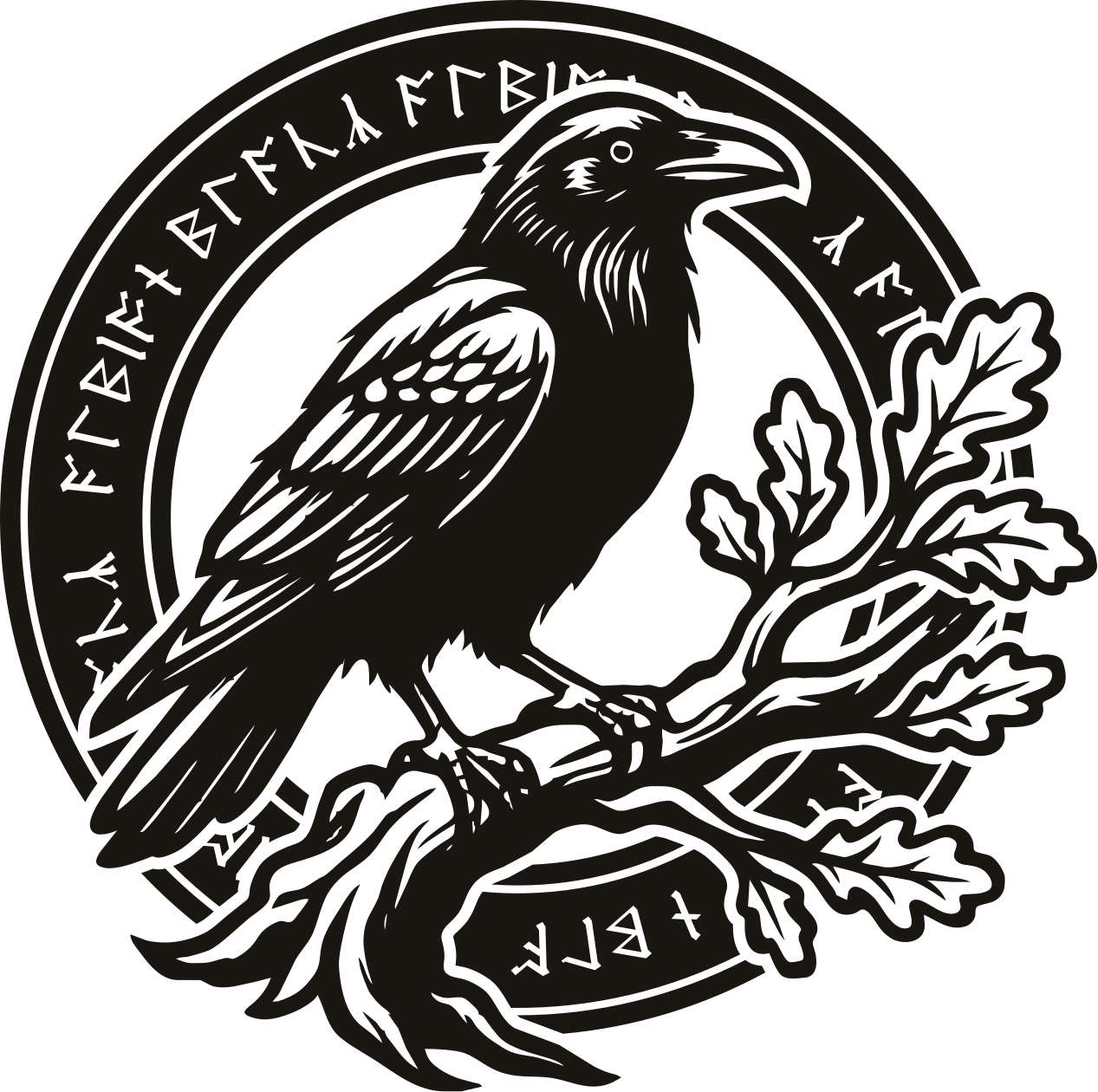
The raven mark on the shop items is the same woodcut-style illustration that appears at the top of this page. The raven felt like the right emblem: it turns up across British and Norse tradition, it is associated with battle, prophecy, and the turning of fortune, and it is a bird that actually lives here, you can hear them on the coast, see them working the thermals above the Welsh hills. If you want to carry that mark on a badge or wear it on a t-shirt, the shop exists for exactly that reason.
Get in touch
If you have a legend, a local tradition, a sighting, or a piece of regional folklore that you think belongs here, or if you have found an error in something that has been published, write to hello@albionblack.com. Corrections are taken seriously. Local knowledge is genuinely welcomed. The archive grows better when people who actually live in these places add what they know.